![]() |
![]() |
![]() |
![]() |
![]() |
![]() |
![]() |
|
| Home | FAQ | Advertise | Articles | About | |||
|
|
|||||||
|
|
Become a Home Based Travel Agent
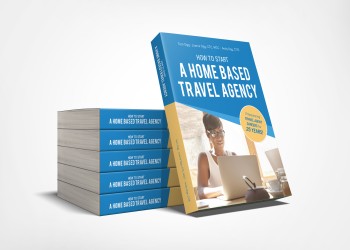
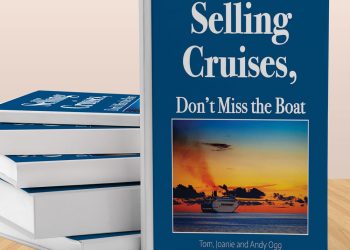
Eight Tips for Writing & Editing Copy Tom and I have been working on re-writing two of our books, “How to Start a Home Based Travel Agency” and “Selling Cruises, Don’t Miss the Boat”. The good news is we are finally finished and both books will feature new and current information. This is always a major task and one that take some serious editing and proofing. Whenever we do this I am reminded of how important it is to try to use the right words and emotions to bring both knowledge and entertainment to the reader. To talk about a topic is easy, but putting it in writing is really very different. We are blessed that Tom and I think alike and know each other so well that we can help one another get our messages across to our readers. We typically write our respective chapters and proof and re-proof one another’s writing and editing till we get it right. Often times we will ask a third party who is in the travel business to take a look for us and give it one more set of eyes. So many of us write copy for our own advertising and we want to be sure that our sales copy really sells for us. Perhaps you are building your web site and writing copy for the world to see. It is a rather ominous thing to think about when you realize anyone and everyone can read it. Advertisement in local newspapers, newsletters and emails along with a multitude of other projects require careful writing and most importantly editing and proofing. Let’s go over some commandments that may help you sell more with the words you use on your website, advertising, newsletters, promotional flyer and any and all of your communication pieces. I have done some research on this in the past and having used some of it as we worked on the books I thought I would share it with you. 1. What are you selling? Look at what you are selling from your clients/customers perspective. What benefits will they gain from what you are doing for them or selling to them? I remember when I studied for my CTC that features and benefits was a huge piece of the exam. That remains true here as well. Make a list in order of importance of at least 5 of the benefits as you see them through the eyes of your customers. 2. Why You? Selling a seven night Eastern Caribbean cruise on a mass-market line may be apples to apples in terms of price, features and benefits. If so, why is your service selling that product better in the eyes of your customers? They must be able to read between the lines and see that it is not the product (because that is constant) but you do it in a way that makes them want to buy from you. 3. Target You have to know who your audience is and you must gear the words within your copy to ring true to the needs and desires of your customers. Speaking to Gen X readers will be entirely different then to a group of senior citizens. You must write your copy to assure the readers you are targeting get your message loud and clear! They need to feel as is the words are written with them in mind. It has to hit home. 4. Keep Focused Always keep your end objective front of mind. If your aim is to sell a family reunion cruise then don’t get too wordy and bury your message. Making your points strong but succinct will keep the reader more engaged. I am one to get far to wordy when I write and Tom is always yanking words out of my sentences. I have learned not to take it personally, however. 5. Watch Out for Adjectives If your copy sounds too good to be true the reader will likely skip read and perhaps will miss something important by doing so. Using too many adjectives such as amazing, wonderful, great, best, fantastic, etc. may turn off the reader. Your words need to demonstrate that the offering is in fact all of those things without actually using the words. 6. Structure is Key Everything has a beginning, middle and an end. So should your copy. You want to be sure that you write logically. Having a great headline and a strong close is very important. While the peanut butter between the bread is important as well, the beginning and end are really the key elements. 7. Aim to Please It is really quite easy to write something with good intentions and meaning only to find it might be offensive to a reader. I remember someone told me once never to tell a joke when I was public speaking. I could never understand why not since I had enjoyed many a good joke listening to other speakers. I remember asking my mentor who shared this with me why not? He said quite simply that for one I was a lousy joke teller (this is true) and that while something might seem funny to part of an audience could I really be sure it was funny to all. If I could not be sure of that then the rule of thumb is to never do it! The same goes for writing. You must know your reader and if there is the slightest chance that something might offend or upset the reader then just don’t do it! Never criticize music, clothes, culture or anything that might seem offensive to someone else. 8. Edit, edit and edit again! When we are focused on completing a task sometimes we hurry it along and not always bringing the result we had hoped for. When I am editing for long periods of time I simply get lazy and let things slide. I try to catch myself and force myself to stop and come back to it with a fresh mind. That of course is easier said then done as getting the project completed is the goal. The rule of writing is that every single word must be worth printing. This is especially important when we are printing large quantities of books that will be out there in the marketplace for lengthy periods of time. Trust when I share that we know the pain of not catching things only too personally. Try to be critical of your own copy but if you can get other eyes to edit then be sure to take advantage of the clarity someone else might be able to offer.
|
|
|
||||||
|
|
| Thanks for visiting the Home Based Travel Agent Information Center |