Home FAQ Advertise Articles About


Home
Books
News
Host Agencies
Article Library
Education and Training
Opportunity
Community
Scams
FAQ


BOOKS

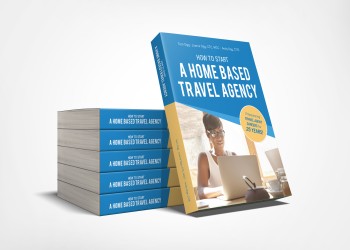
How to Start a Home Based Travel Agency Study Guide

2012 Edition
Now Available


Order Books - More Book Info.
Table of Contents


How to Start a Home Based
Travel Agency Workbook

Order Books


Selling Cruises,
Don't Miss the Boat


Order Books - More Book Info.
Table of Contents


Home Based Travel Affiliate,

Order Books - More Book Info

Table of Contents


Marketing and Sales Prescriptions for Today's Economy & Beyond

Order Books - More Book Info.
Table of Contents


Become a Home Based Travel Agent

Become a Home Based Travel Agent

Aloha Airlines, Lessons Learned
By Tom Ogg

The only job that I really ever had was working for Aloha Airlines. As a surfer, it allowed me to enjoy Hawaii while also earning a living. Many of my surfer friends couldn’t believe that I could fly to Hawaii for every new swell and make it a business trip too. Aloha Airlines was an amazing business and I was lucky to be one of just a handful of “haoles” that work for them. Aloha had considerable growth during the hay days of Hawaii’s explosive growth during the 1970s. Even today, most of the hotels and resorts were built during this phenomenal growth period. But, as all things in life, a confluence of events drew Aloha Airline’s (and Hawaii’s) growth to a screeching halt.

It was at this point that I speculated that Aloha should vertically integrate into the wholesale tour operation market. After all, who knew Hawaii better? We already had an established sale force on the mainland that already had relationships with travel agents that produced Hawaii revenue and it was crystal clear that travel agents were moving from doing FITs to FIT tour operators that offered substantial commissions to travel agents making Hawaii FITs quite profitable. However, the management of Aloha Airlines saw their core value proposition as an airline, not a tour operator and focused on cost cutting measures rather than revenue expansion. This turned out to be a huge mistake as competition cut into Aloha’s market share and profitability. Aloha Airlines went bankrupt a couple of years ago and never regained its once impressive profile.

While there were several lessons that Aloha Airlines taught me, the one that sticks with me still is that Aloha Airlines confused market share, revenue flow and traditional market orientation with their core value proposition. Aloha didn’t have a problem with revenue or market share, the problem was revenue segment yield. By relying on tour operators as a major portion of their revenue Aloha almost guaranteed that they would only achieve revenue segment yields at minimum levels. Meanwhile, the tour operators that sold the neighbor island segments as part of a FIT were generating huge internal yields. Had Aloha Airlines focused on profit per passenger rather than market share, they would probably be a large international airline at this point.

Here are the lessons that I learned from Aloha Airlines.

Just When You Think Things Can’t Get Better, They Don’t: Innovation and creativity generally lead to success and growth and just when you think things are fantastic, watch out! Your competitors have noticed your success and are busy trying to out-perform your success and will probably be successful at it eventually. Success guarantees one thing, more competition. You should learn to recognize the signs of maturation of a successful campaign and spend more time investing in the next opportunity than you do enjoying your success.

When Market Share Becomes the Primary Function of Competition, Think Yield Performance: This was Aloha Airline’s fatal mistake. When competition drives operating revenues into red ink it is time to reevaluate your core value proposition and look for ways to leverage it by integrating vertically or horizontally to expand internal yields to regain black ink. Even if it costs market share, let your competitor try to make losing internal yields up by increasing their volume. It has never worked for anyone and it won’t work for them. Back in the midst of the airfare coupon wars, Aloha would have been smart to buy coupons for their competitors, cut their schedule and focused on high density flights with high internal yields and send the low-yield business to their competitors.

Recognize Change Before it Impacts Your Business: The common fare, the elimination of the Maui fence, GV fares, satellite global communications, FIT operators, the Internet, the Web, eTickets, direct settlement and peer to peer social networks have all had a dramatic impact on the neighbor island and mainland to Hawaii markets, yet Aloha Airlines was slow to recognize and exploit these changes. Nothing stays the same forever. By recognizing innovation and changes in distribution channels, you can usually reposition yourself to exploit the change long before those with less vision do.

Understand When Your Basic Value Proposition Has Become Antiquated: So many once-successful travel organizations have failed to respond to change and have allowed their very core value proposition to become antiquated and out-of-date. While they may die a slow and painful death, failing to recognize the demise of a business’s reason for being in business is a sure-fire way to cease operations.

Embrace Forward and Creative Thinking: I well recall one meeting where a sales representative from Southern California suggested that Aloha should fly “flightseeing segments” The concept took aircraft during soft periods that consistently lost money during its time slot and would offer passengers “flightseeing” opportunities on their flight. Instead of selling a transportation flight segment, Aloha could offer a unique sightseeing event that would allow passengers to see out-of-the-way places and sights on their flight from one island to another. Aloha could have charged a considerable amount of money for the sightseeing event and it wouldn’t have cost Aloha anything more than a little flight time and some extra jet fuel. However, the impact in terms of yield for the aircraft at the time period would have been substantial. The idea was shelved because management didn’t see the idea as viable since it wasn’t within their core value proposition.

Keep an Open Mind Regarding Your Business’s Future: Aloha Airlines taught me to keep an entirely open mind about ventures I have been involved with since and has served me well. I hope that these lessons can be applied to your business too. We are all subject to changing distribution channels and the effects of technology, so keep an open mind and prosper.


Tom Ogg
Tom Ogg & Associates
Editor and Publisher

Tom is a 35 year travel industry veteran who’s experience includes over 10 years in sales management for an airline, owning a wholesale Hawaii tour company, starting one of the very first credible “host travel agency models”, has written numerous books about the travel industry including “How to Start a Home Based Travel Agency’, “Selling Cruises, Don’t Miss the Boat” and “Home Based Travel Affiliate, Turn Your Computer into a Virtual Money Machine”. Tom’s newest book “Selling Niche Cruises, How to Turn Small Ships into Big Bucks” was just released. Tom is also the founder of the “CruiseReviews.com” complex of consumer cruise sites including Cruise-Chat.com, which enjoys over 20,000 avid cruises discussing everything under the sun about cruising. Tom also founded the travel industry’s “CruiseAgentDigest” and the unbelievably popular “HomeBasedTravelAgentCommunity.com” social networking site for travel professionals. Tom has trained over 10,000 cruise professionals on land based and cruise seminars on ways to grow their businesses using best industry practices.


Travel Quest Host Agency


Thanks for visiting the Home Based Travel Agent Information Center